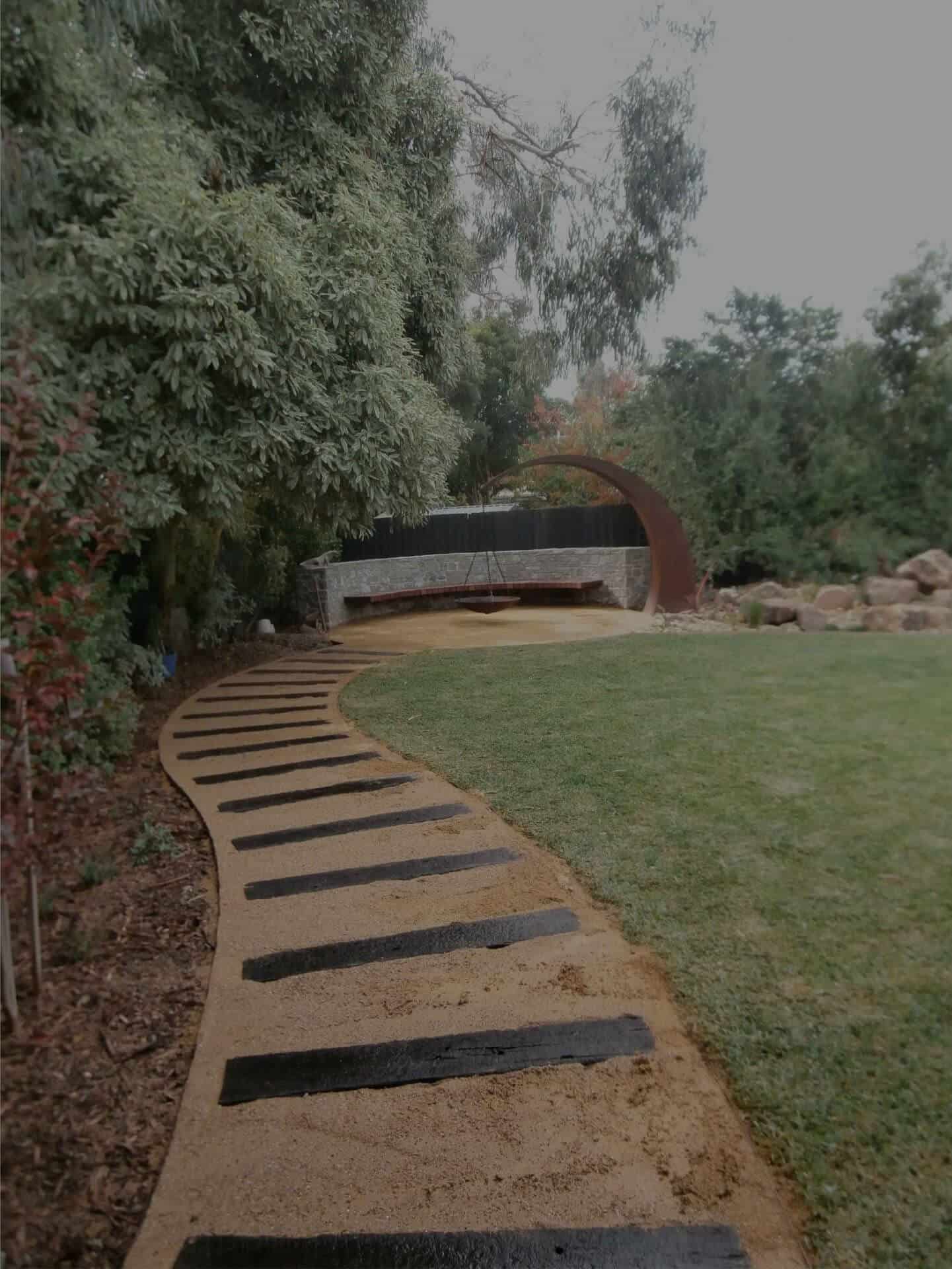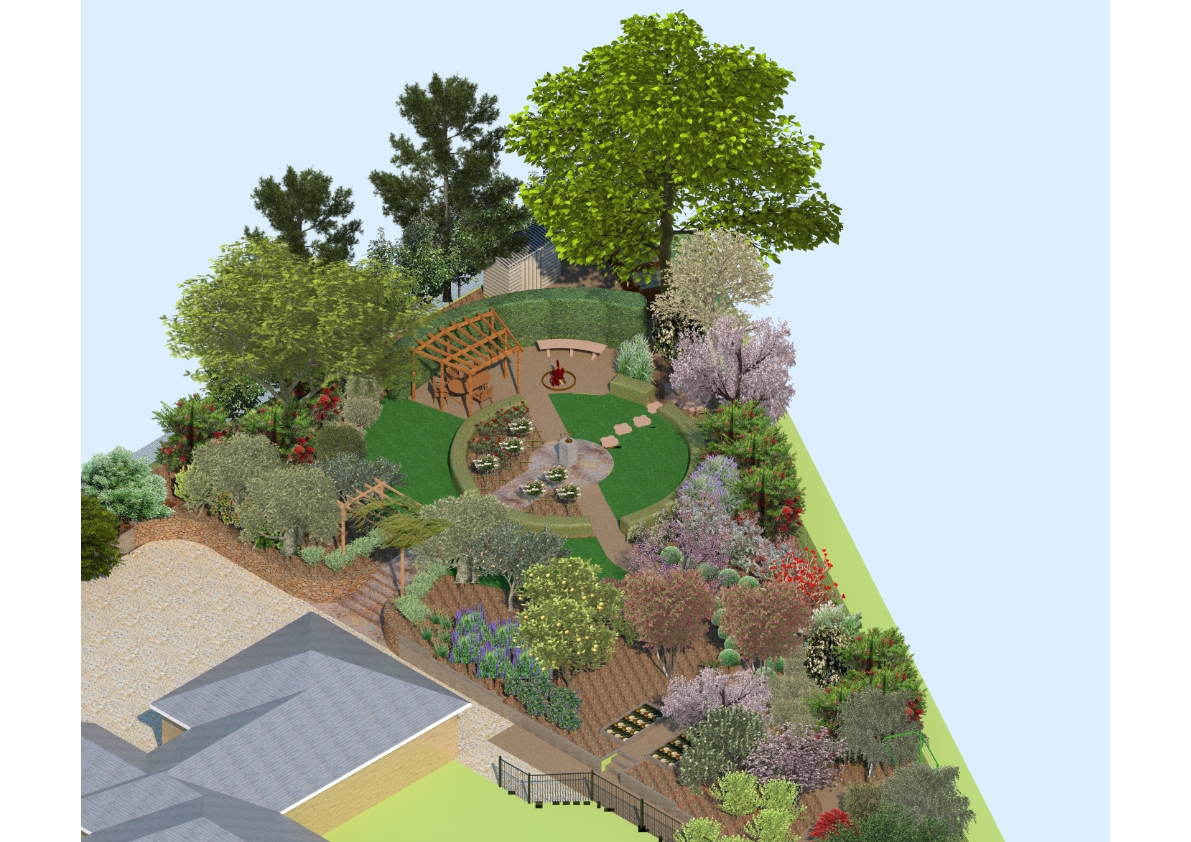
Landscape design has changed significantly over the last four decades I have been designing gardens and how I approach teaching landscape design. Shifting towards a more ecological, sustainable, and socially responsive discipline. The changes reflect advances in environmental science, technology, climate awareness, and changing expectations about how outdoor spaces should function. For me designing gardens by hand was such an enjoyable and creative process i never envisaged my drafting board leaving the office to be replaced with a computer. But here we are, hundreds of hours of training and CAD designs later, fully embracing the great advantages, technical advancement has given designers.
1. From ornamental gardens to sustainable landscapes
1980s:
Landscape design often focused on appearance, formal planting schemes, lawns, and ornamental features. Many gardens relied on large areas of turf, exotic plants, irrigation systems, and chemical maintenance.
Today:
Designers increasingly prioritise sustainability through:
- Native and drought-tolerant plants
- Water-sensitive design
- Reduced lawn areas
- Rain gardens and stormwater management
- Habitat creation for birds, insects, and wildlife
- Lower-maintenance planting systems
The goal has shifted from simply creating attractive spaces to creating landscapes that support ecological health.
2. Greater awareness of climate change
Over the past four decades, landscape architects have become more focused on climate resilience. Modern projects often address:
- Urban heat reduction through tree planting and shade
- Flood management through permeable surfaces and wetlands
- Bushfire resilience in vulnerable areas
- Coastal protection and adaptation to rising sea levels
Landscapes are now viewed as part of environmental infrastructure rather than separate from it.
3. The rise of native and regional planting
In the 1980s, many residential and public landscapes used imported ornamental species because of their appearance and availability. Today there is greater appreciation for local ecosystems.
Modern designers often use:
- Indigenous plant species
- Local ecological communities
- Plants suited to regional conditions
- Designs that reflect local identity and culture
This has been particularly important in Australia, where native planting supports biodiversity and reduces water consumption.
4. Technology has transformed the design process
Landscape design has become much more technology driven. When I began my design career designers mainly relied on:
- Hand-drawn plans
- Physical models
- Site surveys
Today we use:
- Computer-aided design (CAD)
- 3D modelling and visualisation
- Geographic information systems (GIS)
- Drone surveys
- Digital climate and water analysis tools
These technologies allow designers to test how landscapes will perform before construction. At Abben art we use 3D modelling to allow our clients a walk through their garden before a spade has broken soil.
5. More emphasis on people and wellbeing
Earlier landscape design often prioritised visual beauty and function. Contemporary design places more emphasis on human experience, including:
- Mental health benefits of green spaces
- Outdoor recreation
- Community interaction
- Inclusive access for people of different ages and abilities
- Spaces that encourage social connection
Parks, gardens, and public spaces are increasingly designed as places for wellbeing and community building.
6. Urban landscapes have become more important
As cities have grown denser, landscape design has expanded beyond gardens and parks. Modern projects include:
- Green roofs
- Vertical gardens
- Streetscape improvements
- Urban forests
- Pocket parks
- Public plazas
Landscape designers now play a key role in making cities healthier and more liveable.
7. Changing attitudes toward water
Traditional landscapes often depended on regular irrigation and high-water use. Water conservation has become a central design consideration.
New approaches include:
- Capturing and reusing stormwater
- Using permeable paving
- Designing with natural drainage patterns
- Selecting plants according to local rainfall
8. Cultural and community involvement
Contemporary landscape design increasingly recognises that landscapes carry cultural meaning. Designers now often work with:
- Local communities
- Indigenous groups
- Historians and ecologists
In Australia, this includes greater incorporation of Aboriginal knowledge, connection to Country, and culturally significant landscapes.